
1. PhD Position in Fungal Cell Biology
- O2 Gebouw
- 0.8 / 1
- PhD
- Sluit op27-11-2026
- Amsterdam
- Faculty of Science
- MSc
- Publicatiedatum13-11-2026
1. PhD Position in Fungal Cell Biology
- O2 Gebouw
- Amsterdam
- 0.8 / 1
- Faculty of Science
- PhD
- MSc
- Sluit op27-11-2026
- Publicatiedatum13-11-2026
Your function
We are looking for a motivated PhD candidate to join the Nuclear Swarms project, funded by an NWO Vidi grant and led by Dr Vasilis Kokkoris at Vrije Universiteit Amsterdam.
Arbuscular mycorrhizal fungi form partnerships with plants and play important roles in nutrient uptake and ecosystem functioning. Yet, despite their ecological importance, we know remarkably little about how their cells are organised. Their extensive networks of fungal filaments contain a continuous cytoplasm shared by thousands of nuclei. How these nuclei move, divide and respond to their surroundings—and whether they behave independently or collectively—remains largely unknown.
In Nuclear Swarms, we will investigate nuclear organisation and behaviour across these fungal networks. We want to understand how individual nuclei contribute to the functioning of the cell and how their collective behaviour may change as the fungus grows and encounters different conditions.
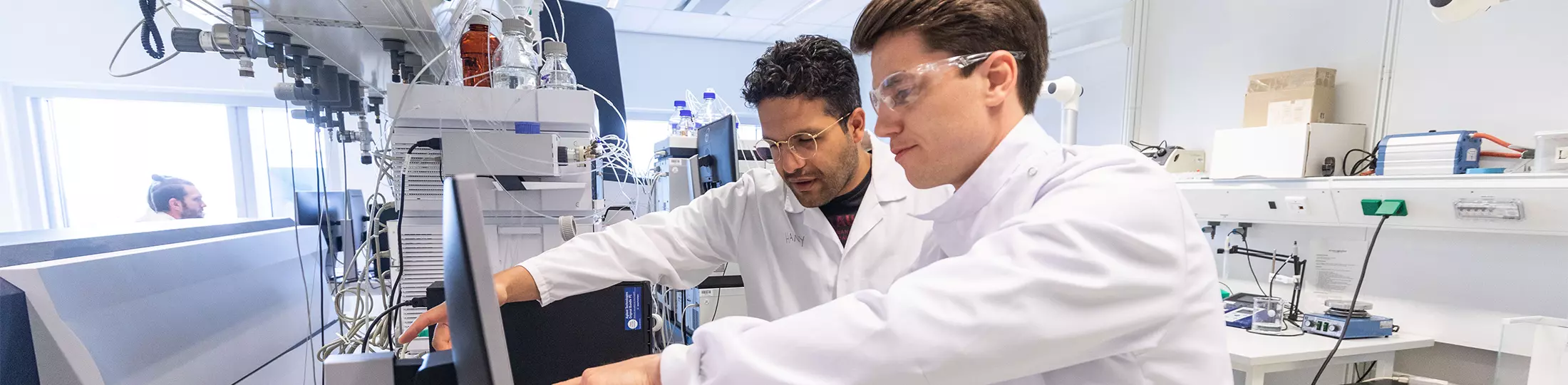
As a PhD candidate, you will combine live-cell imaging with experimental and molecular approaches to investigate nuclear dynamics in arbuscular mycorrhizal fungi. You will develop experiments to track nuclei over time, examine their distribution and division, and test how their behaviour responds to changes in the cellular environment. Together with other team members and our collaborators, you will use quantitative analyses to identify patterns in nuclear behaviour and explore whether these are consistent with coordinated or independent responses.
This project offers an opportunity to investigate fundamental questions in cell biology using an ecologically important, non-model fungal system. You will join an interdisciplinary team working at the interface of fungal biology, microscopy, molecular biology and quantitative research.
Your duties
- design and conduct experiments to investigate nuclear organisation and behaviour in arbuscular mycorrhizal fungi
- cultivate and maintain fungal material using appropriate experimental systems
- use fluorescence and live-cell microscopy to visualise nuclei and their dynamics in fungal networks
- track and quantify nuclear movement, distribution and division under different experimental conditions
- apply and develop molecular and cell-biological methods to investigate nuclear properties and activity
- analyse microscopy and experimental data using appropriate quantitative and statistical approaches
- work with colleagues and collaborators to integrate experimental observations with quantitative or computational approaches
- contribute to reproducible research practices and the sharing of data and methods
- present your findings at national and international scientific meetings
- write scientific publications and a PhD thesis
- contribute to teaching and supervision of students where appropriate
Your profile
You are curious about how cells work and motivated to explore biological questions in a system that challenges conventional ideas about cellular organisation. You enjoy experimental work, think critically about your results and are enthusiastic about learning new techniques.
- an MSc degree, or equivalent, in microbiology, molecular biology or a related field, with a strong interest in microscopy and data analysis
- experience with in vitro culturing of fungi (required)
- experience with microscopy techniques and/or genetic transformation techniques. Experience with confocal microscopy is preferred
- knowledge of image analysis and programming using software such as R/RStudio, Python or MATLAB
- a strong interest in fungal biology, cell biology or the organisation and behaviour of nuclei
- experience with experimental laboratory research and a willingness to work with a challenging non-model organism
- good analytical and problem-solving skills
- the ability to work independently and collaboratively within an interdisciplinary team
- a good command of spoken and written English
Experience with one or more of the following would be an advantage:
- experience in bioinformatics
- image processing and quantitative analysis of microscopy data
- molecular biology techniques, such as DNA or RNA analysis, PCR or fluorescence in situ hybridisation
- cell biology methods for studying DNA replication, cell division or intracellular dynamics
As a university, we strive for equal opportunities for all, recognising that diversity takes many forms. We believe that diversity in all its complexity is invaluable for the quality of our teaching, research and service. We are always looking for talent with diverse backgrounds and experiences. This also means that we are committed to creating an inclusive community so that we can use diversity as an asset.
We realise that each individual brings a unique set of skills, expertise and mindset. Therefore we are happy to invite anyone who recognises themselves in the profile to apply, even if you do not meet all the requirements.
What do we offer?
A challenging position in a socially engaged organisation. At VU Amsterdam, you contribute to education, research and service for a better world. And that is valuable. So in return for your efforts, we offer you:
- a salary of € 3.204,00 (PhD) and maximum € 4.051,00 (PhD) gross per month in the fourth year, for a full-time employment
- an employment contract of initially 1 year. If there is sufficient perspective, this will be extended to a total of 4 years. Your dissertation at the end of the fourth year forms the end of your employment contract.
We also offer you attractive fringe benefits and arrangements. Some examples:
- A full-time 38-hour working week comes with a holiday leave entitlement of 232 hours per year. If you choose to work 40 hours, you have 96 extra holiday leave hours on an annual basis. For part-timers, this is calculated pro rata.
- 8% holiday allowance and 8.3% end-of-year bonus
- contribution to commuting expenses
- solid pension scheme (ABP)
- a wide range of sports facilities which staff may use at a modest charge
About us
About the department
You will join the research group of Dr Vasilis Kokkoris within A-LIFE Systems Ecology at Vrije Universiteit Amsterdam. Our research focuses on the biology and ecology of arbuscular mycorrhizal fungi, with particular interest in how these organisms organise their cells and networks, interact with other organisms and respond to their environment.
Our group combines experimental systems, microscopy and molecular and quantitative approaches to investigate fungal biology across scales. You will work alongside PhD candidates, postdoctoral researchers and students, and have opportunities to collaborate with researchers within VU Amsterdam, across the Netherlands and internationally.
Faculty of Science
Working at the Faculty of Science means collaborating with students, lecturers and researchers who are focused on their field, yet have a broad view of the world. We are proud of a positive and inclusive workplace culture within the faculty, where we work together with great energy and a pragmatic attitude to tackle social challenges. At the Faculty of Science, scientists and students work on fundamental and complex societal issues for a sustainable, healthy and just future.
From forest fires to big data, from obesity to malnutrition, from helium to the universe and from genetics to medicine: our education and research cover the full breadth of science, from molecules to mankind. Our academic education and research are highly experimental, technical and interdisciplinary in nature. That is why we collaborate extensively with leading scientific institutes and industry. The faculty has more than 8,000 students studying in one of the 39 programms and employs more than 1,400 staff across 10 scientific departments, making us one of the largest science faculties in the Netherlands.
Vrije Universiteit Amsterdam
Vrije Universiteit Amsterdam stands for values-driven education and research. We are open-minded experts with the ability to think freely - a broader mind. Maintaining an entrepreneurial perspective and concentrating on diversity, significance and humanity, we work on sustainable solutions with social impact. By joining forces, across the boundaries of disciplines, we work towards a better world for people and planet. Together we create a safe and respectful working and study climate, and an inspiring environment for education and research. Learn more about our codes of conduct
We are located on one physical campus, in the heart of Amsterdam's Zuidas business district, with excellent location and accessibility. Over 6,150 staff work at the VU and over 31,000 students attend academic education.
Diversity
Diversity is the driving force of VU Amsterdam. VU wants to be accessible and receptive to diversity in disciplines, cultures, ideas, nationalities, beliefs, preferences and worldviews. We believe that trust, respect, interest and differences lead to new insights and innovation, to sharpness and clarity, to excellence and a broader understanding.
We stand for an inclusive community and believe that diversity and internationalisation contribute to the quality of education, research and our services.
Therefore, we are always searching for people whose backgrounds and experience contribute to the diversity of the VU community.
Interested
Are you interested in this position and do you believe that your experience will contribute to the further development of our university? In that case, we encourage you to submit your application.
Please submit:
- a motivation letter describing your interest in the project, your relevant research experience and the skills you would like to develop
- your curriculum vitae
- your MSc diploma and transcript of grades
- the names and contact details of two academic referees
In your motivation letter, please tell us about your experience with experimental research and, where relevant, microscopy, molecular methods, image analysis or programming.
Submitting a diploma and a reference check are part of the application process.
Applications received by e-mail will not be considered.
Acquisition in response to this advertisement is not appreciated.
Your function
We are looking for a motivated PhD candidate to join the Nuclear Swarms project, funded by an NWO Vidi grant and led by Dr Vasilis Kokkoris at Vrije Universiteit Amsterdam.
Arbuscular mycorrhizal fungi form partnerships with plants and play important roles in nutrient uptake and ecosystem functioning. Yet, despite their ecological importance, we know remarkably little about how their cells are organised. Their extensive networks of fungal filaments contain a continuous cytoplasm shared by thousands of nuclei. How these nuclei move, divide and respond to their surroundings—and whether they behave independently or collectively—remains largely unknown.
In Nuclear Swarms, we will investigate nuclear organisation and behaviour across these fungal networks. We want to understand how individual nuclei contribute to the functioning of the cell and how their collective behaviour may change as the fungus grows and encounters different conditions.
As a PhD candidate, you will combine live-cell imaging with experimental and molecular approaches to investigate nuclear dynamics in arbuscular mycorrhizal fungi. You will develop experiments to track nuclei over time, examine their distribution and division, and test how their behaviour responds to changes in the cellular environment. Together with other team members and our collaborators, you will use quantitative analyses to identify patterns in nuclear behaviour and explore whether these are consistent with coordinated or independent responses.
This project offers an opportunity to investigate fundamental questions in cell biology using an ecologically important, non-model fungal system. You will join an interdisciplinary team working at the interface of fungal biology, microscopy, molecular biology and quantitative research.
Your duties
- design and conduct experiments to investigate nuclear organisation and behaviour in arbuscular mycorrhizal fungi
- cultivate and maintain fungal material using appropriate experimental systems
- use fluorescence and live-cell microscopy to visualise nuclei and their dynamics in fungal networks
- track and quantify nuclear movement, distribution and division under different experimental conditions
- apply and develop molecular and cell-biological methods to investigate nuclear properties and activity
- analyse microscopy and experimental data using appropriate quantitative and statistical approaches
- work with colleagues and collaborators to integrate experimental observations with quantitative or computational approaches
- contribute to reproducible research practices and the sharing of data and methods
- present your findings at national and international scientific meetings
- write scientific publications and a PhD thesis
- contribute to teaching and supervision of students where appropriate
Your profile
You are curious about how cells work and motivated to explore biological questions in a system that challenges conventional ideas about cellular organisation. You enjoy experimental work, think critically about your results and are enthusiastic about learning new techniques.
- an MSc degree, or equivalent, in microbiology, molecular biology or a related field, with a strong interest in microscopy and data analysis
- experience with in vitro culturing of fungi (required)
- experience with microscopy techniques and/or genetic transformation techniques. Experience with confocal microscopy is preferred
- knowledge of image analysis and programming using software such as R/RStudio, Python or MATLAB
- a strong interest in fungal biology, cell biology or the organisation and behaviour of nuclei
- experience with experimental laboratory research and a willingness to work with a challenging non-model organism
- good analytical and problem-solving skills
- the ability to work independently and collaboratively within an interdisciplinary team
- a good command of spoken and written English
Experience with one or more of the following would be an advantage:
- experience in bioinformatics
- image processing and quantitative analysis of microscopy data
- molecular biology techniques, such as DNA or RNA analysis, PCR or fluorescence in situ hybridisation
- cell biology methods for studying DNA replication, cell division or intracellular dynamics
As a university, we strive for equal opportunities for all, recognising that diversity takes many forms. We believe that diversity in all its complexity is invaluable for the quality of our teaching, research and service. We are always looking for talent with diverse backgrounds and experiences. This also means that we are committed to creating an inclusive community so that we can use diversity as an asset.
We realise that each individual brings a unique set of skills, expertise and mindset. Therefore we are happy to invite anyone who recognises themselves in the profile to apply, even if you do not meet all the requirements.
What do we offer?
A challenging position in a socially engaged organisation. At VU Amsterdam, you contribute to education, research and service for a better world. And that is valuable. So in return for your efforts, we offer you:
- a salary of € 3.204,00 (PhD) and maximum € 4.051,00 (PhD) gross per month in the fourth year, for a full-time employment
- an employment contract of initially 1 year. If there is sufficient perspective, this will be extended to a total of 4 years. Your dissertation at the end of the fourth year forms the end of your employment contract.
We also offer you attractive fringe benefits and arrangements. Some examples:
- A full-time 38-hour working week comes with a holiday leave entitlement of 232 hours per year. If you choose to work 40 hours, you have 96 extra holiday leave hours on an annual basis. For part-timers, this is calculated pro rata.
- 8% holiday allowance and 8.3% end-of-year bonus
- contribution to commuting expenses
- solid pension scheme (ABP)
- a wide range of sports facilities which staff may use at a modest charge
About us
About the department
You will join the research group of Dr Vasilis Kokkoris within A-LIFE Systems Ecology at Vrije Universiteit Amsterdam. Our research focuses on the biology and ecology of arbuscular mycorrhizal fungi, with particular interest in how these organisms organise their cells and networks, interact with other organisms and respond to their environment.
Our group combines experimental systems, microscopy and molecular and quantitative approaches to investigate fungal biology across scales. You will work alongside PhD candidates, postdoctoral researchers and students, and have opportunities to collaborate with researchers within VU Amsterdam, across the Netherlands and internationally.
Faculty of Science
Working at the Faculty of Science means collaborating with students, lecturers and researchers who are focused on their field, yet have a broad view of the world. We are proud of a positive and inclusive workplace culture within the faculty, where we work together with great energy and a pragmatic attitude to tackle social challenges. At the Faculty of Science, scientists and students work on fundamental and complex societal issues for a sustainable, healthy and just future.
From forest fires to big data, from obesity to malnutrition, from helium to the universe and from genetics to medicine: our education and research cover the full breadth of science, from molecules to mankind. Our academic education and research are highly experimental, technical and interdisciplinary in nature. That is why we collaborate extensively with leading scientific institutes and industry. The faculty has more than 8,000 students studying in one of the 39 programms and employs more than 1,400 staff across 10 scientific departments, making us one of the largest science faculties in the Netherlands.
Vrije Universiteit Amsterdam
Vrije Universiteit Amsterdam stands for values-driven education and research. We are open-minded experts with the ability to think freely - a broader mind. Maintaining an entrepreneurial perspective and concentrating on diversity, significance and humanity, we work on sustainable solutions with social impact. By joining forces, across the boundaries of disciplines, we work towards a better world for people and planet. Together we create a safe and respectful working and study climate, and an inspiring environment for education and research. Learn more about our codes of conduct
We are located on one physical campus, in the heart of Amsterdam's Zuidas business district, with excellent location and accessibility. Over 6,150 staff work at the VU and over 31,000 students attend academic education.
Diversity
Diversity is the driving force of VU Amsterdam. VU wants to be accessible and receptive to diversity in disciplines, cultures, ideas, nationalities, beliefs, preferences and worldviews. We believe that trust, respect, interest and differences lead to new insights and innovation, to sharpness and clarity, to excellence and a broader understanding.
We stand for an inclusive community and believe that diversity and internationalisation contribute to the quality of education, research and our services.
Therefore, we are always searching for people whose backgrounds and experience contribute to the diversity of the VU community.
Vragen over de vacature?
Dr. Vasilis Kokkoris
Interested
Are you interested in this position and do you believe that your experience will contribute to the further development of our university? In that case, we encourage you to submit your application.
Please submit:
- a motivation letter describing your interest in the project, your relevant research experience and the skills you would like to develop
- your curriculum vitae
- your MSc diploma and transcript of grades
- the names and contact details of two academic referees
In your motivation letter, please tell us about your experience with experimental research and, where relevant, microscopy, molecular methods, image analysis or programming.
Submitting a diploma and a reference check are part of the application process.
Applications received by e-mail will not be considered.
Acquisition in response to this advertisement is not appreciated.
Vragen over de vacature?
Dr. Vasilis Kokkoris
Sollicitatieprocedure
Sollicitatie ontvangen
Wij hebben je sollicitatie goed ontvangen. We streven ernaar om je zo snel mogelijk een eerste reactie te geven. Normaal gesproken is dat twee weken na het verstrijken van de deadline.
Screening CV
Een selectiecommissie beoordeelt of je voldoet aan de gestelde wensen/eisen voor de vacature. Bij een positieve beoordeling nodigen we je uit voor een eerste (hybride) sollicitatiegesprek.
1e Gesprek
2e Gesprek
Voor het tweede gesprek vragen we je meestal om naar onze VU campus te komen.
Pre-employment screening
Optioneel antecedentenonderzoek
In dienst
Welkom je bent in dienst bij de Vrije Universiteit!!
Andere interessante vacatures

PhD: Learning interactions in collective cell migration
- 0.9 / 1
- Faculty of Science
- PhD
- MSc
- Sluit op31-12-2026
- Publicatiedatum20-07-2026
-
0.0 km
PhD Position in Neuroimaging, LLM, Genetics and Cross-species comparison
- 1 / 1
- Faculty of Science
- PhD
- MSc
- Sluit op15-12-2026
- Publicatiedatum26-10-2026
-
0.0 km
PhD-student Online/offline relaties van jongeren
- 0,8 / 1
- Faculteit der Gedrags- en Bewegingswetenschappen
- PhD
- WO / MSc
- Sluit op24-11-2026
- Publicatiedatum30-10-2026
-
0.1 km
PhD in Labour Migration in Digital Industrial Policy
- 1 / 1
- Faculty of Social Sciences and Humanities
- PhD
- MSc
- Sluit op01-12-2026
- Publicatiedatum05-11-2026
-
0.5 km
PhD in Early Modern Religious Debates. The use of AI in analysing sources
- 1 / 1
- Faculty of Social Sciences and Humanities
- PhD
- MSc
- Sluit op27-11-2026
- Publicatiedatum28-10-2026
-
0.5 km
PhD Position Early Modern Religious Debates and the Public Sphere
- 1 / 1
- Faculty of Social Sciences and Humanities
- PhD
- MSc
- Sluit op27-11-2026
- Publicatiedatum28-10-2026
-
0.5 km
Mis jouw droombaan niet!
Deze website maakt gebruik van cookies
Wij, en derde partijen, maken op onze website gebruik van cookies. Wij gebruiken cookies om ervoor te zorgen dat onze website goed functioneert, om jouw voorkeuren op te slaan, om inzicht te verkrijgen in bezoekersgedrag, maar ook voor marketing en social media doeleinden (laten zien van gepersonaliseerde advertenties). Door op ‘Accepteren’ te klikken, ga je akkoord met het gebruik van alle cookies. In onze Cookieverklaring kun je meer lezen over de cookies die wij gebruiken en kun je jouw voorkeuren opslaan of wijzigen. Door ‘Weigeren’ te klikken ga je alleen akkoord met het gebruik van functionele cookies.